The Imperial Forum
As in all the surrounding cities –the Iluberis of Lumbier or the one in Fillera de Sos del Rey Católico/Sangüesa, for example– it was the ascent to the imperial throne of Emperor Augustus that changed the face and appearance of the city of Santa Criz. It not only abandoned its position perched on the heights but also sought the valley to the south, towards the foot of the foothills of the Sierra de Zaldinaga. The location of the city at the foot of the road called Iacca (Jaca)-Vareia (Logroño) would make it possible for the houses and urban planning to adopt a distinctly Roman appearance in this expansion.
The main public building incorporated at this key moment was the forum, a large open square built on a wide terrace of the hill and a series of two-level structures, in a cryptoporticus, which constitute an extraordinary example of Roman public architecture in the region. The southern part of the square must have housed the basilica, an administrative and judicial building with two naves, profusely decorated with columns and numerous capitals but erected on a substructure at a lower level and built according to the cryptoporticus technique. What has been excavated, therefore, in this area, constitutes only a third of the total square which, in its moment of greatest splendor, would proudly display its architecture to travelers passing through the aforementioned road.
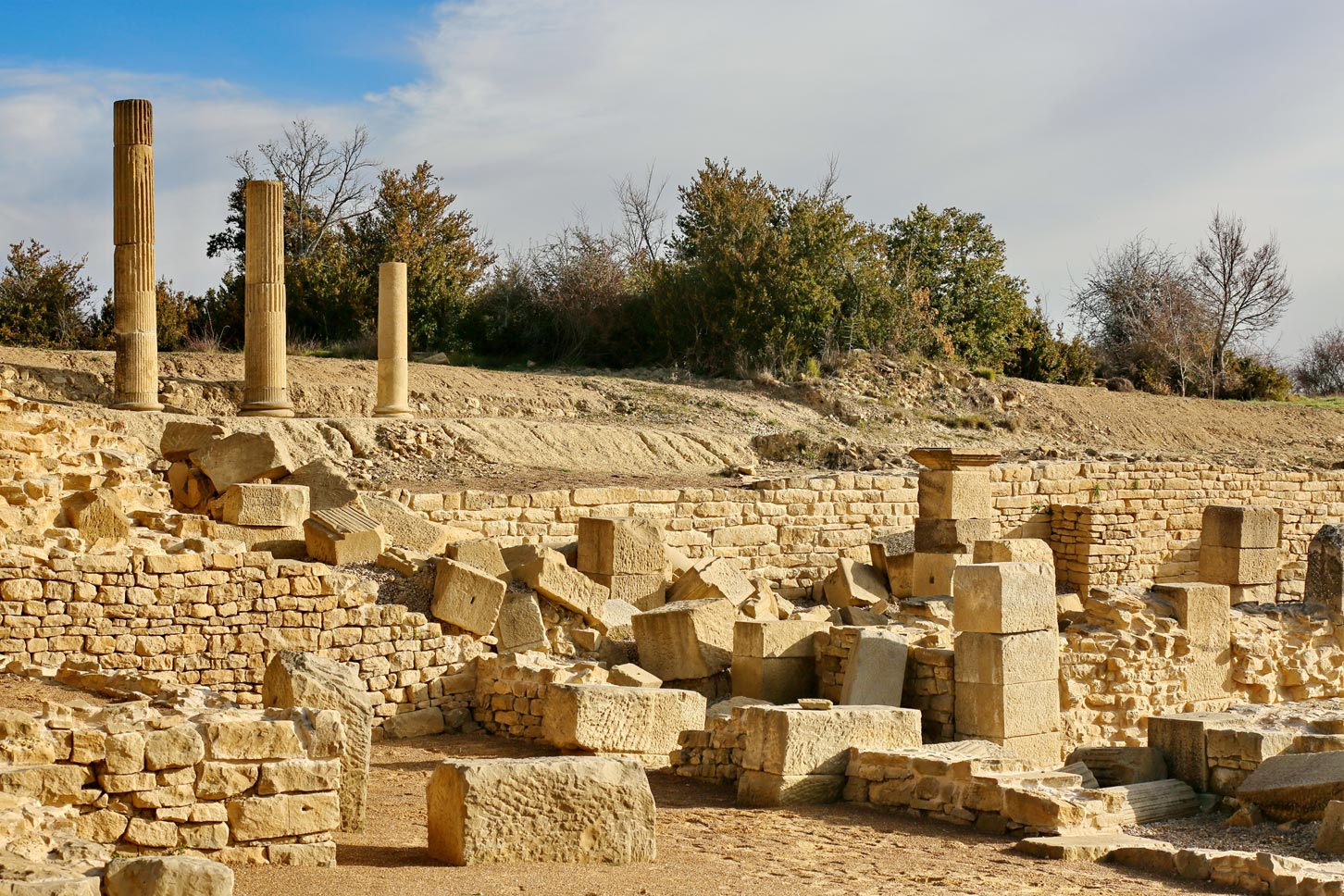
On the outside of the cryptoporticus, and at various times, a series of enclosures or premises were added that perhaps fulfilled the function of tabernae, and at its two ends, two bays would allow access to the upper part, of an open-air square, of the forum.
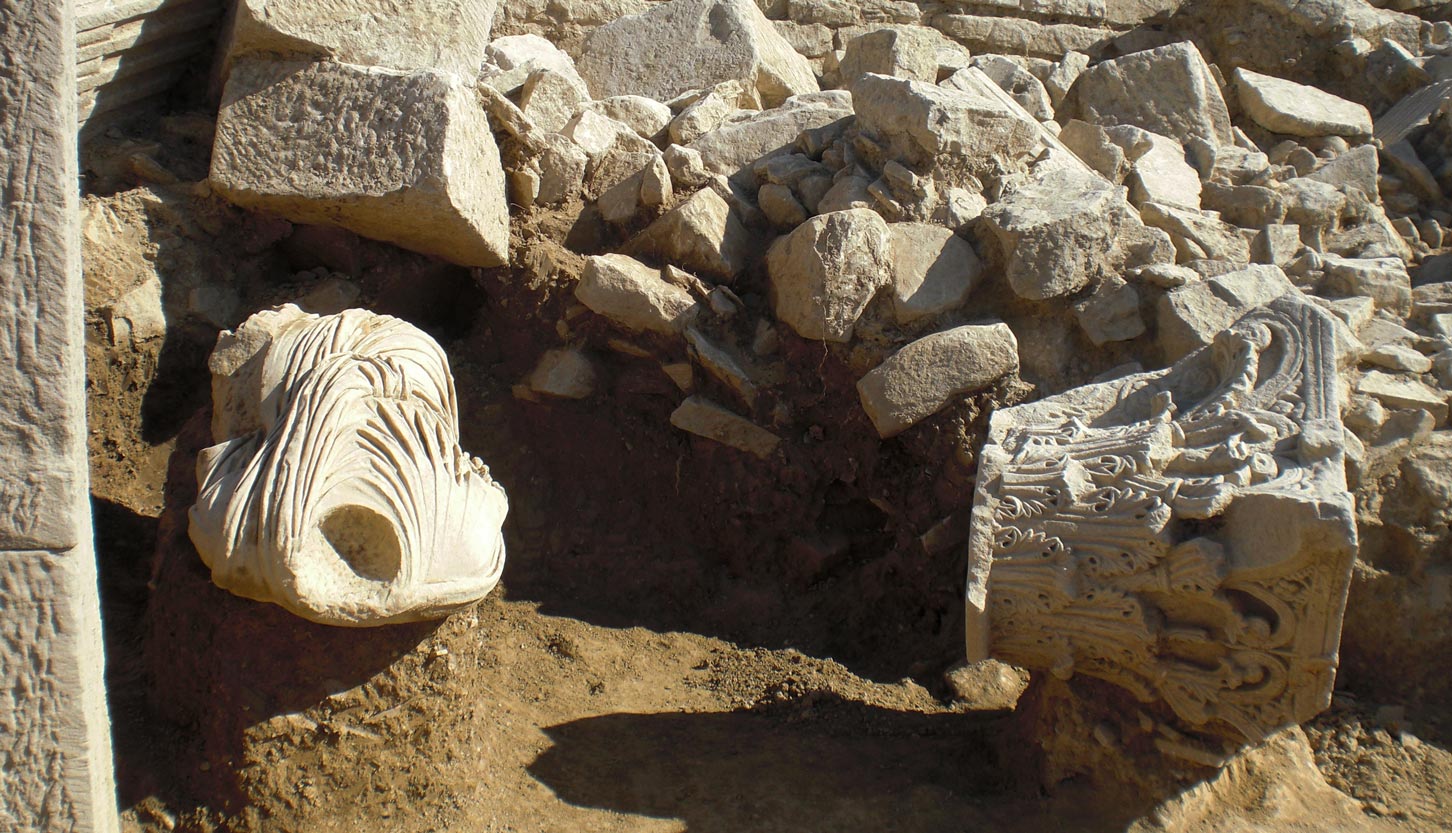
This building, in use between the end of the 1st century BC and the beginning of the 3rd century AD, has provided a very remarkable collection of architectural decoration that includes bases, capitals and shafts of different types, as well as marble statuary that, together with some inscriptions, demonstrates the early strength of the ciuitas and the involvement in its development of the local elite with families such as the Valerii, Cornelii and, perhaps, Calpurnii, all well documented in the repertoire of inscriptions from the city, one of the most generous in the region.
Eslava Town Council
Calle Inmaculada 36
31494, Eslava, Navarre
T 948 733 012
Cooperative Winery
Hours
Monday to Friday
9:00 AM to 2:30 PM
admon@bodegaeslava.es
Bar
Hours
Monday to Sunday
1:00 PM to 2:30 PM and 5:30 PM to 9:30 PM
Shop
Hours
Monday to Friday
9:00 AM to 11:30 AM
Website has been financed by the Next Generation EU funds and included within the Recovery, Transformation and Resilience Plan, Digital Spain 2025 and the SME Digitalization Plan.

2025 © Eslava Town Council