Santa Criz De Eslava
Vasconic and Roman City
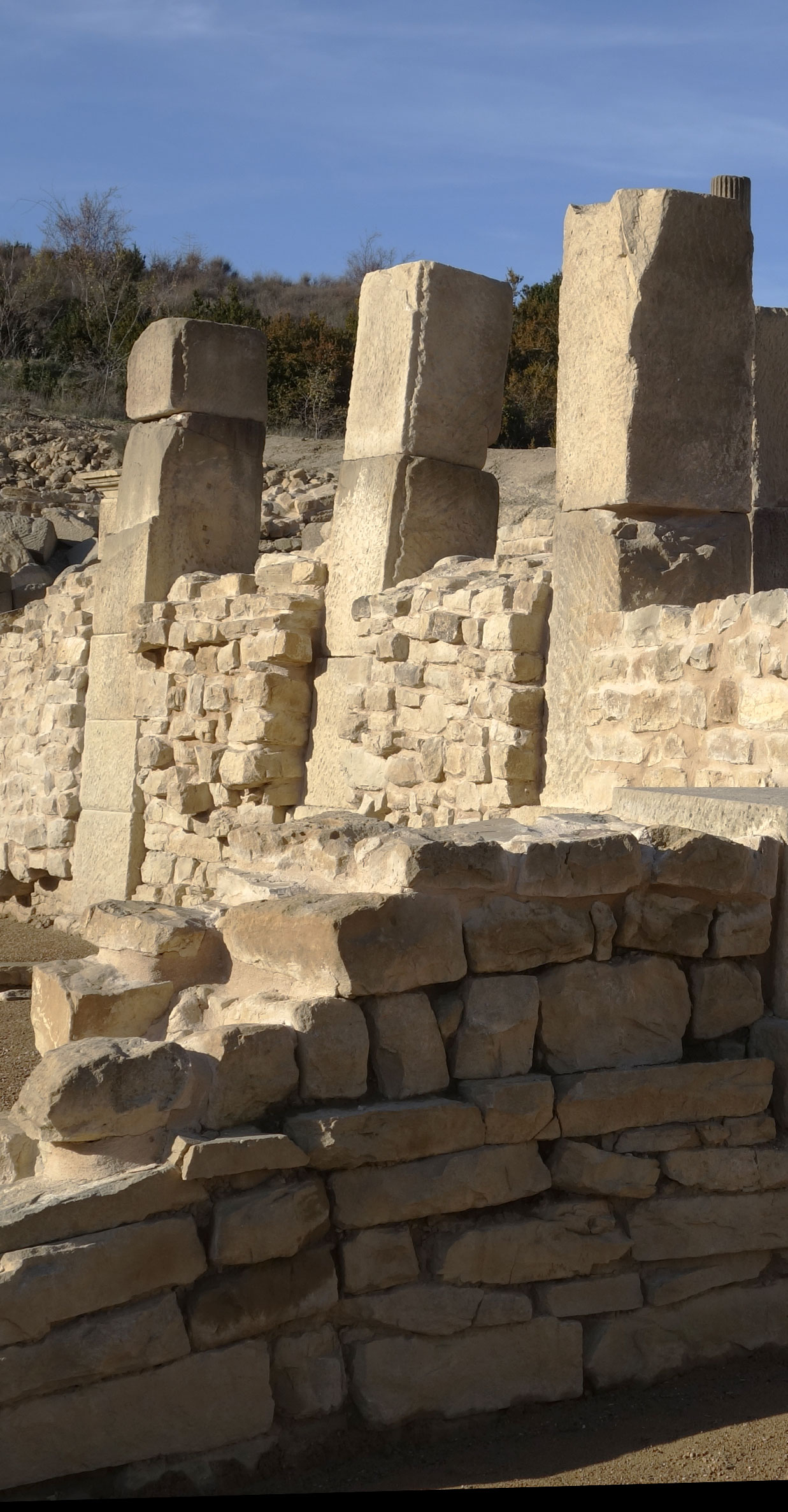
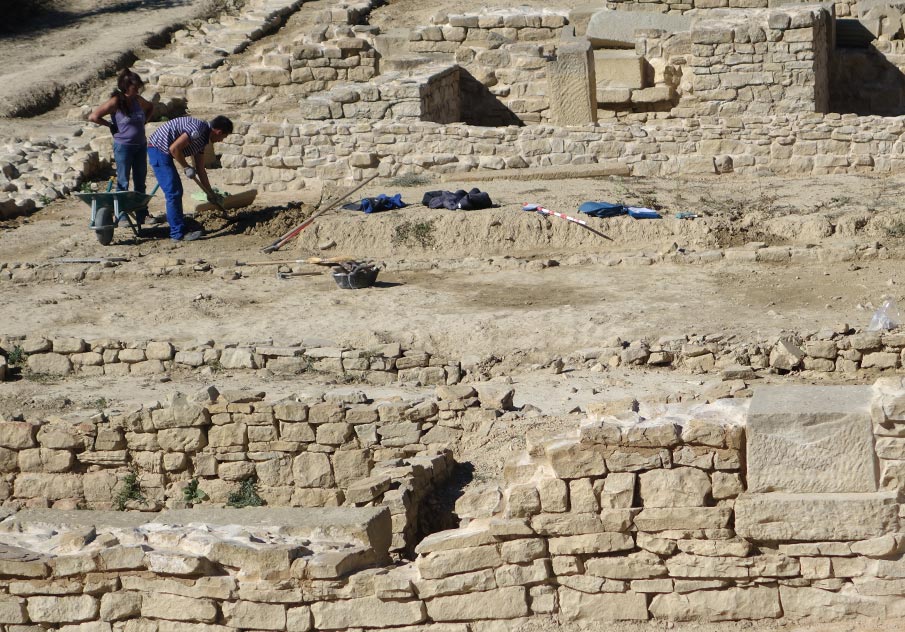
Located just 40 minutes from Pamplona, in the heart of Eastern Middle Navarre, in the Sangüesa Region, the site, which preserves the remains of what was the city’s forum and necropolis, offers an extraordinary glimpse into the public sphere of the Roman cities of the Basque region. In this sense, a visit here is a good complement to those of Andelo (Mendigorría), Cara (Santacara) or Los Bañales (Uncastillo), the latter already in the lands of Zaragoza. Santa Criz de Eslava is also a good excuse to discover other Roman remains of notable value in its vicinity, such as the Roman villa of Liédena or the buildings that remain of the city of the Iluberitani, in Lumbier.
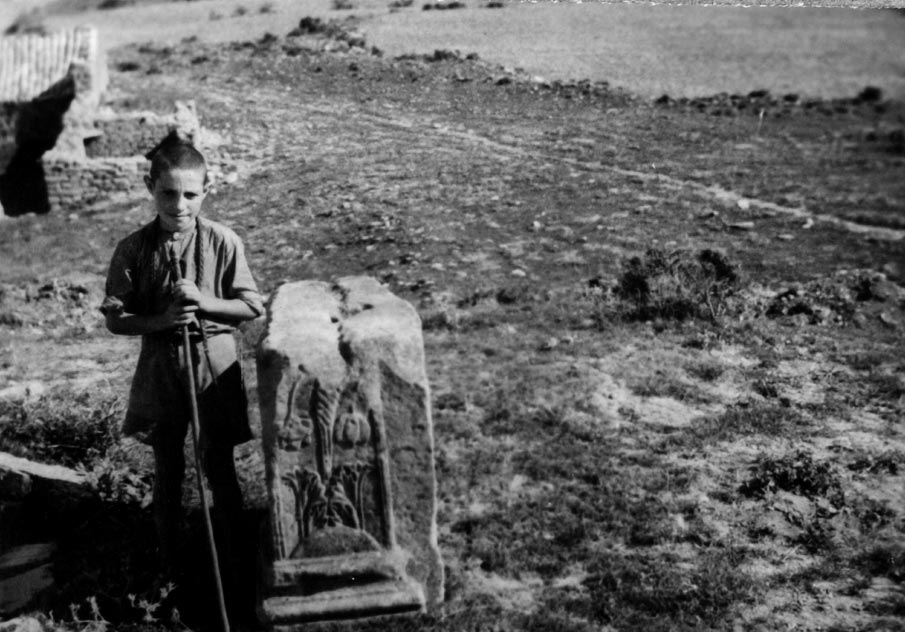
The site was discovered in 1917 by the priest Juan Castrillo, and since the mid-1990s it has been the subject of continuous archaeological excavations led by the team of Tx. Mateo, P. Sáez and R. Armendáriz. Currently, thanks to a collaboration agreement signed between the Eslava Town Council and the Faculty of Philosophy and Letters of the University of Navarre, guided tours are organised for groups and various events that seek to bring life back to this true reflection of Rome in Basque territory.
The pre-Roman City
The Imperial Forum
The Civic Necropolis
Discover our virtual museum
Research
1917-1994
Background
In 2017, one hundred years have passed since the name of Santa Criz de Eslava was first reflected in a scientific publication. It was in 1917 when Juan Castrillo, then parish priest of Sada, published in the Bulletin of the Commission of Monuments of Navarre a milestone of the emperors Maximino and Máximo dated in the year 238 AD… Read more
1994
Prospecting
In 1994, Pilar Sáez de Albéniz, Rosa Armendáriz and Txaro Mateo carried out the systematic surveys that covered part of the municipal district of Eslava (excluding the reforested forest areas of the north and south of the town), which served to lay the foundations of the historical context of the enclave in its immediate environment… Read more
1995
First Excavation Campaign
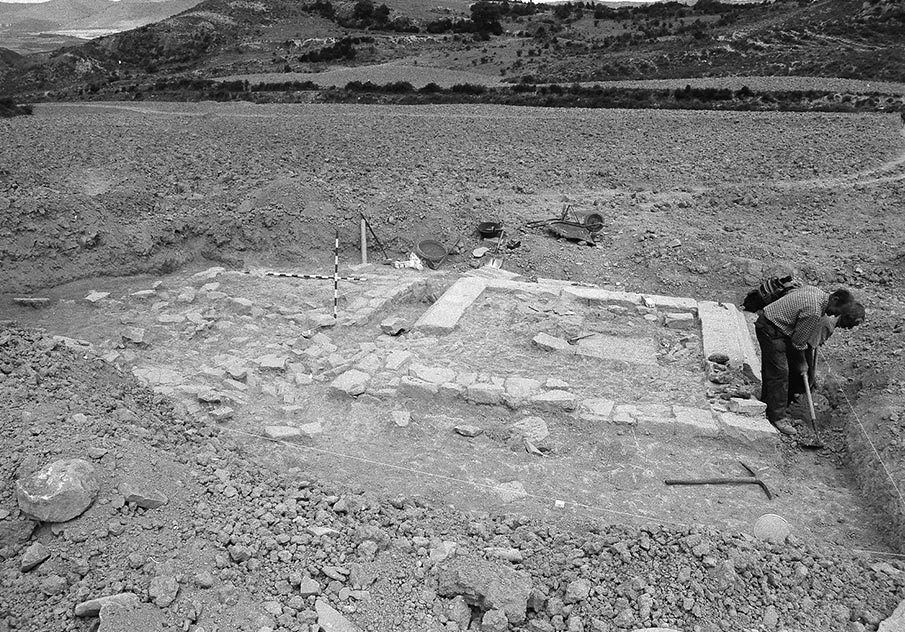
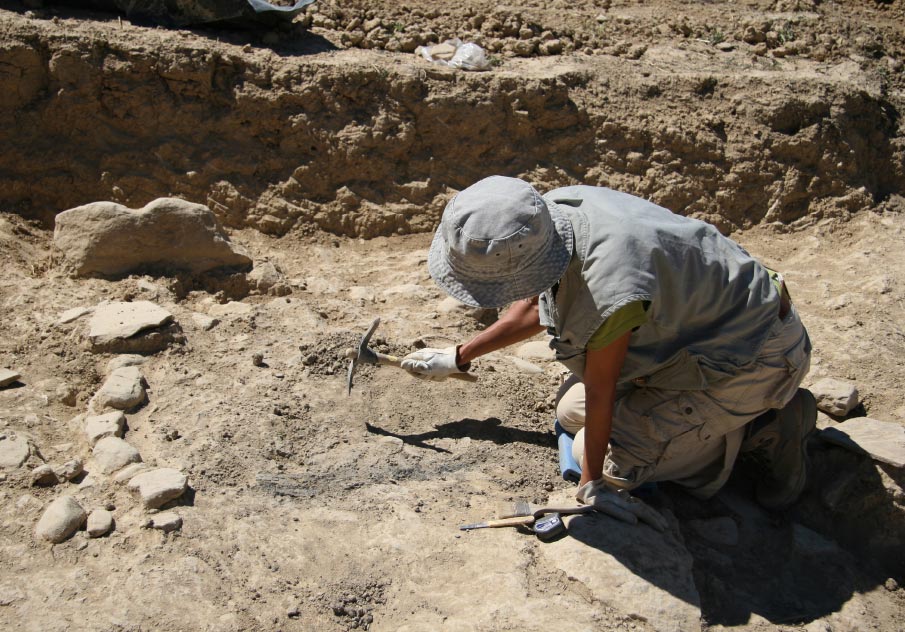
In 1995 mechanical surveys were carried out on plot 163, which allowed the exhumation of archaeological structures, including the funerary enclosure called Mausoleum 1. Given the importance of the discovery, the team formed by Pilar Sáez de Albéniz, Rosa Armendáriz and Txaro Mateo… Read more
1996
Second Excavation Campaign
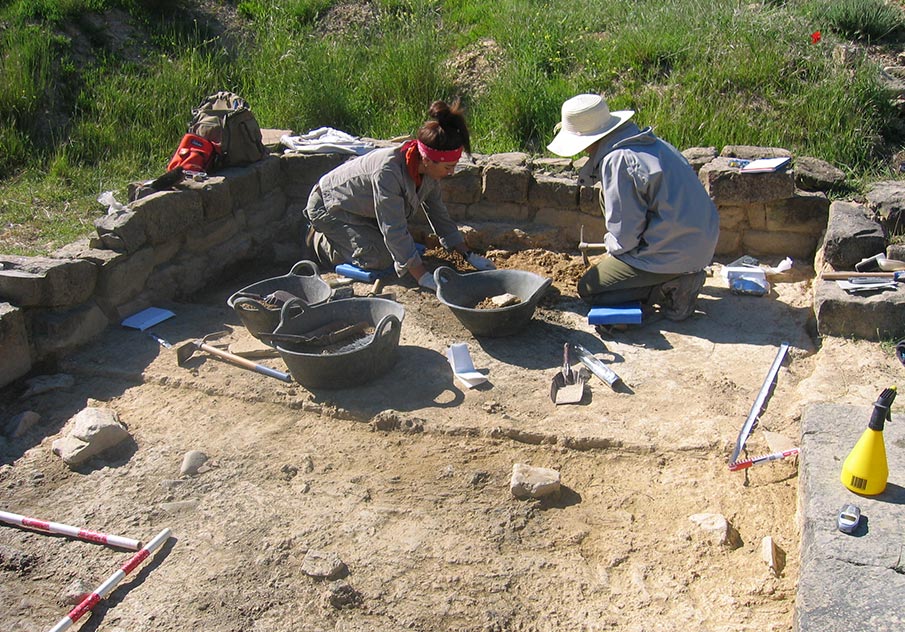
In 1996, and again with a grant from the Government of Navarre, the same team composed of the three archaeologists Pilar Sáez de Albéniz, Rosa Armendáriz and Txaro Mateo, and two workers, continued with the archaeological intervention. The work was concentrated in the necropolis, on the hillside and in the western part of it, next to the access road…. Read more
2006
Third Excavation Campaign
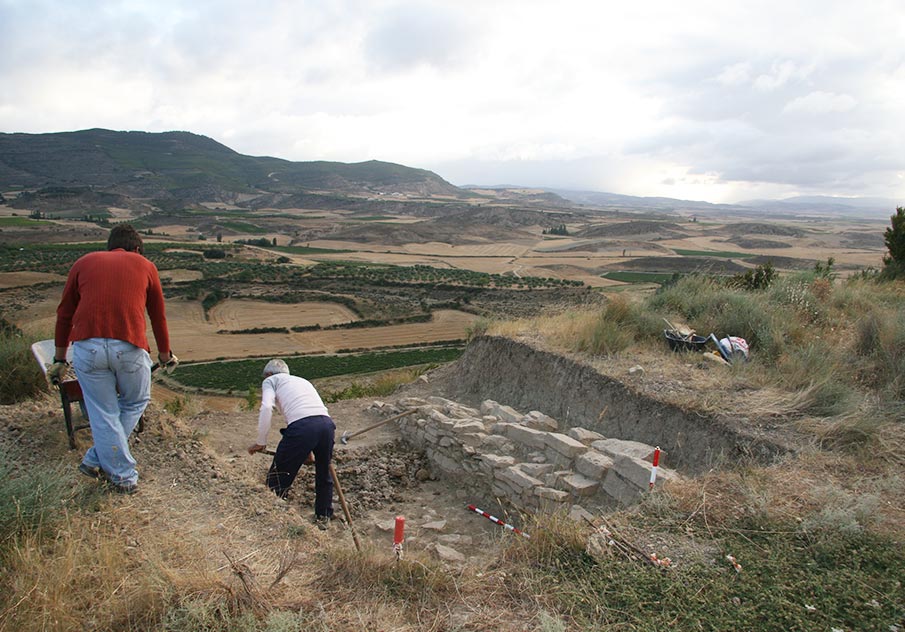
On the occasion of the elaboration of the Master Plan of the site, Pilar Sáez de Albéniz, Rosa Armendáriz and Txaro Mateo resumed the work undertaken in the previous decade. The first action consisted of the systematic survey of each plot of the hill and its immediate surroundings in order to delimit and sectorise the archaeological site…. Read more
2007
Fourth Excavation Campaign
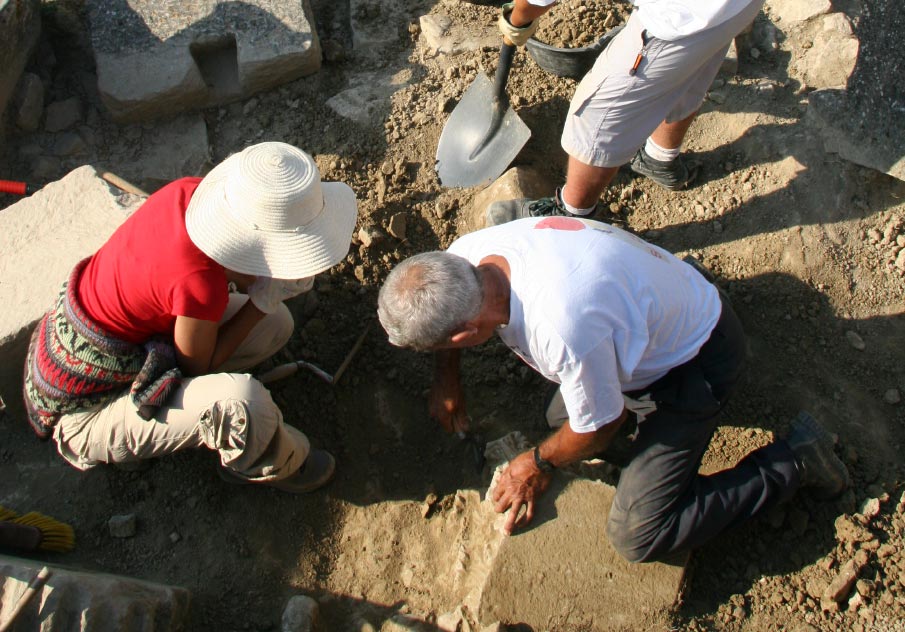
At the beginning of 2007, a relatively novel intervention was carried out in the Foral Community of Navarre; the geophysical survey. With this work they revealed aspects of the enclave that were only intuited and in some cases unknown. Thus, the existence, already pointed out, of a dense and very well preserved urban grid in the area of the hill was confirmed, and a more real sketch of the configuration of the necropolis could be traced. …. Read more
2015
Consolidation
In 2015, consolidation and enhancement work was carried out in the Civitas, improving access and signage. Read more